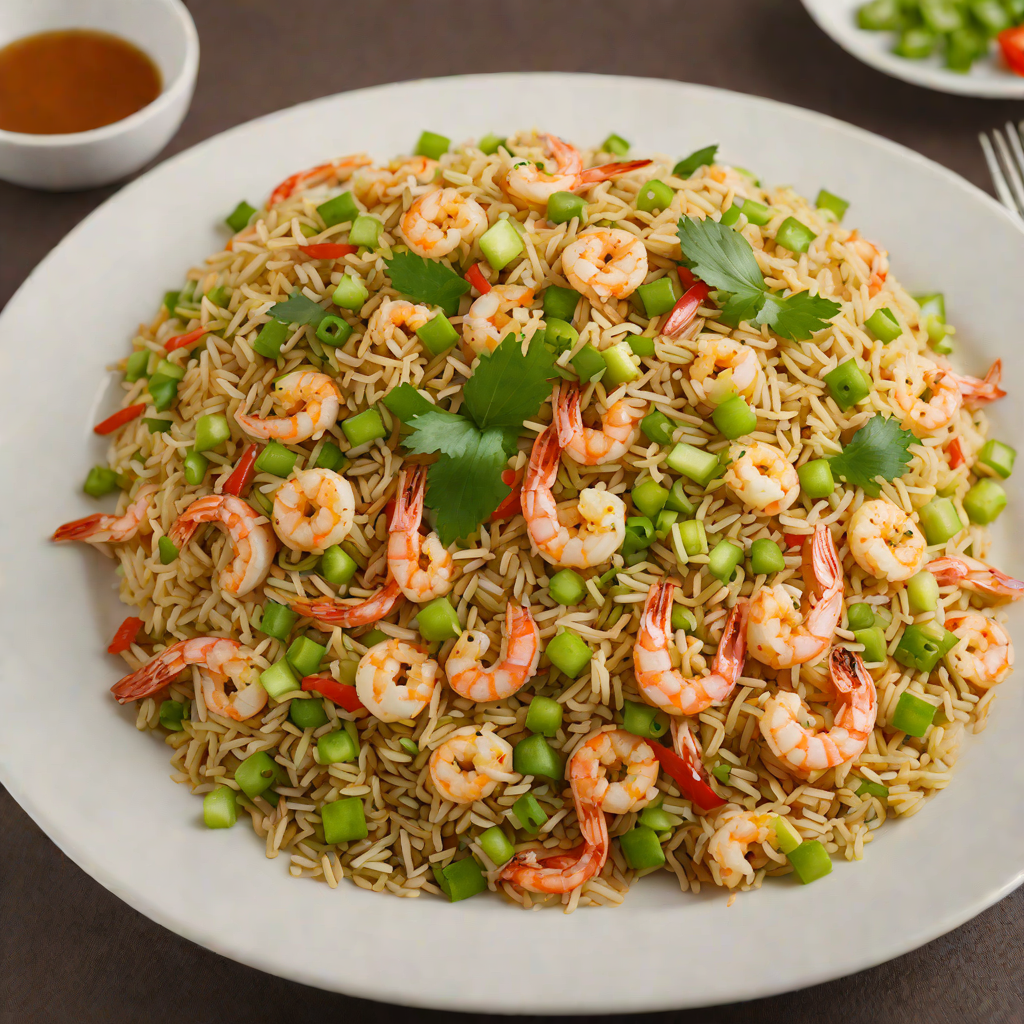
20 Fried Rice Recipes: Chinese, Thai, Korean & Filipino Favorites
Yangzhou, pineapple khao pad, kimchi, sinangag and Cuban-Chinese fried rice, with the cold-rice, hot-pan, sauce-last method behind every one.
If you want fried rice that tastes like a good takeout counter, start with cold, cooked rice from the fridge. Heat the pan until the oil shimmers and fry the eggs and protein separately. Add the soy sauce last, once the rice is already hot. Below are 20 fried rice recipes from the AislePrompt catalog: Chinese, Thai, Korean, Filipino and fusion. Every one spends 15 minutes or less on the burner once your rice is cold and your mise en place is chopped.
Get a free week of easy dinners
Seven weeknight dinners with the shopping list already totalled, sent Sunday. No account needed, unsubscribe in one click.
No spam, unsubscribe in one click. Recipes, shopping lists and Instacart carts all work without an account either way.
Introduction: why day-old rice is non-negotiable for real fried rice
Fried rice was a leftover dish from the start. Wikipedia's history of fried rice traces the earliest record to the Sui dynasty (589–618 AD) in China, around the city of Yangzhou. It began as a way to rescue cooked rice that had hardened overnight. The same entry makes the point every home cook learns the hard way: making fried rice with fresh rice "can prevent it from frying properly, leading to an undesirably soft texture."
Here's what that means at the stove. Freshly steamed rice is wet on the surface and soft all the way through. Drop it in hot oil and that surface water turns to steam, so the grains glue into a mushy mass instead of frying. After a night uncovered or loosely covered in the fridge, the outside of each grain dries and firms up. Now the grains separate when you press them with a spatula, the oil coats each one, and you get the chewy, lightly toasted bite that makes fried rice worth eating.
Filipino cooks treat this as a rule, not a tip. Wikipedia's sinangag entry notes that the rice "is preferably stale, usually leftover cooked rice from the previous day," and that making it from freshly cooked rice "is frowned upon in Filipino culture."
So plan fried rice night one day ahead. Cook a double batch of jasmine rice on Sunday, eat half, spread the rest on a sheet pan to cool, then box it and refrigerate it. Most of the recipes below call for 3 to 4 cups of cooked rice to serve 3 or 4 people. That's roughly 1 to 1 1/3 cups of dry rice. If you don't own one yet, a rice cooker makes the double batch a no-think job.
The technique: screaming-hot wok, cook the rice in oil not sauce, add liquids at the end
Almost every recipe in this roundup follows the same five-step skeleton. Learn it once and you can improvise with whatever's in the crisper drawer.
1. Scramble the eggs first, then take them out. Two or three beaten eggs go into shimmering oil for 1–2 minutes until just set but still soft. Move them to a plate. If they stay in the pan, they overcook into rubber while the rice fries.
2. Cook the protein and take it out too. Shrimp needs 2–3 minutes until pink. Diced chicken breast needs about 5. Sliced Chinese sausage, longganisa or diced Spam gets browned to render fat, which then becomes your frying oil.
3. Fry the rice in oil, on its own. Add the cold rice to the hot oil and break up clumps with the back of the spatula. Then stir-fry for 3–4 minutes until every grain is hot and a few start to toast. This is where the texture gets made. Don't add sauce yet.
4. Add sauces to hot rice, never to a cold pan. Soy sauce, oyster sauce and fish sauce go in once the rice is already hot. A thin drizzle around the edge of the pan sizzles and coats the grains. Pour it into the middle of lukewarm rice and it pools and steams.
5. Return the eggs and protein, add the fresh stuff, and serve right away. Scallions, Thai basil, cilantro and a teaspoon of sesame oil go in off the heat or in the last minute.
Two things break this skeleton more than anything else. The first is overcrowding. A 12-inch skillet on a home burner handles about 3 to 4 cups of rice at once, so double the recipe in two batches, not one. The second is medium heat. If the oil isn't shimmering before the eggs go in, turn the burner up and wait.
20 curated fried rice recipes, grouped by cuisine
Here's the full set at a glance. Times are the recipe's listed prep plus cook, with already-cooked cold rice. Calories and protein are per serving, as listed on each recipe.
| # | Recipe | Style | Prep + cook | Serves | Calories | Protein |
|---|---|---|---|---|---|---|
| 1 | Classic Fried Rice with Egg and Scallions | Chinese | 5 + 10 min | 3 | 290 | 9 g |
| 2 | Cantonese Egg and Shrimp Fried Rice | Chinese | 10 + 15 min | 4 | 360 | 25 g |
| 3 | Yang Chow Fried Rice with Shrimp and Scallions | Chinese (Yangzhou) | 10 + 15 min | 4 | 450 | 28 g |
| 4 | Cantonese-Style Egg Fried Rice with Char Siu Pork | Chinese | 10 + 15 min | 4 | 400 | 22 g |
| 5 | Savory Stir-Fried Rice with Chinese Sausage and Eggs | Chinese | 10 + 10 min | 3 | 420 | 15 g |
| 6 | Shanghai-Style Fried Rice with Dried Shrimp | Chinese | 10 + 15 min | 4 | 300 | 10 g |
| 7 | Hunan-Style Spicy Seafood Fried Rice | Chinese | 15 + 15 min | 4 | 430 | 35 g |
| 8 | Golden Fried Rice with Egg, Tomato, and Cilantro | Thai | 10 + 15 min | 4 | 380 | 14 g |
| 9 | Pineapple Fried Rice with Cashews | Thai | 10 + 15 min | 4 | 420 | 12 g |
| 10 | Pineapple and Shrimp Fried Rice with Thai Basil | Thai | 15 + 15 min | 4 | 410 | 32 g |
| 11 | Sweet Corn and Thai Basil Fried Rice | Thai | 15 + 15 min | 2 | 380 | 10 g |
| 12 | Lemongrass Shrimp Fried Rice | Southeast Asian | 20 + 10 min | 3 | 350 | 25 g |
| 13 | Kimchi Fried Rice | Korean | 5 + 15 min | 4 | 420 | 16 g |
| 14 | Intermediate-Level Kimchi Fried Rice with Pork and Egg | Korean | 15 + 15 min | 3 | 450 | 25 g |
| 15 | Adaptable Kimchi Fried Rice with Tofu | Korean | 15 + 10 min | 2 | 380 | 14 g |
| 16 | Garlic Fried Rice with Scallions and Toasted Garlic | Filipino | 5 + 12 min | 4 | 220 | 4 g |
| 17 | Longganisa Fried Rice with Garlic and Scallions | Filipino | 10 + 15 min | 4 | 420 | 18 g |
| 18 | Spam and Egg Breakfast Fried Rice | Filipino / breakfast | 5 + 15 min | 2 | 420 | 20 g |
| 19 | Hibachi Scallion Fried Rice with Egg and Carrots | Japanese hibachi | 10 + 12 min | 3 | 320 | 9 g |
| 20 | Cuban-Chinese Fried Rice with Char Siu Pork | Fusion | 15 + 15 min | 4 | 420 | 22 g |
Every recipe's cook time is 15 minutes or less. The prep column is where the time goes: mincing lemongrass, soaking dried shrimp, dicing pork shoulder. On a busy night, pick a recipe with 5–10 minutes of prep.
Chinese-style fried rice — Yangzhou, Hunan chili, char siu
Chinese fried rice is the template for everything else in this guide. It's savory, lightly smoky, and it lets the rice be the star.
1. Classic Fried Rice with Egg and Scallions. This is the baseline, and the fastest recipe on the list at 15 minutes total. It uses 3 cups of cooked jasmine rice, 2 eggs, 2 garlic cloves, 1/2 cup scallions, 2 tbsp soy sauce and white pepper. If you've never made fried rice, make this first. There's nothing to hide behind, so you'll learn what properly fried grains feel like.
2. Cantonese Egg and Shrimp Fried Rice. Eight ounces of shrimp, 3 eggs, carrot and peas, seasoned with soy sauce, 1 tbsp oyster sauce and a finishing teaspoon of sesame oil. At 25 g of protein per serving, it's a full dinner rather than a side.
3. Yang Chow Fried Rice with Shrimp and Scallions. Yang Chow is an older romanization of Yangzhou fried rice; Yeung Chow is the Cantonese spelling you will see on some menus. The Yangzhou fried rice entry on Wikipedia says the dish traditionally combines proteins, most commonly char siu pork and shrimp. It adds that the same dish is sold as "special fried rice" in Australia and New Zealand, and sometimes as "house fried rice" in the US. This version keeps it simple with shrimp alone, over 4 cups of rice, which is why it has the most calories of the Chinese set at 450. For the full two-protein version, fold in 4 oz of diced char siu from recipe 4.
4. Cantonese-Style Egg Fried Rice with Char Siu Pork. Six ounces of diced char siu gets stir-fried for 1–2 minutes until the edges caramelize. The sweet glaze on the pork seasons the rice along with 2 tbsp of soy sauce, a teaspoon of sesame oil and white pepper. Buy char siu from a Chinese barbecue counter, or use leftovers from our Cantonese recipes roundup.
5. Savory Stir-Fried Rice with Chinese Sausage and Eggs. Two links of lap cheong, sliced thin and browned for 2–3 minutes, release a sweet, fragrant fat that the rice fries in. The eggs scramble right beside the sausage in the same pan, so there's one less plate to wash. It's a 20-minute recipe for 3.
6. Shanghai-Style Fried Rice with Dried Shrimp. A quarter cup of soaked, chopped dried shrimp gives this recipe a deep, briny flavor that fresh shrimp can't match. A tablespoon of rice vinegar and half a teaspoon of sugar balance it. The ingredient list calls for the dried shrimp already soaked, so put them in warm water before you start chopping anything else. At 300 calories it's one of the lightest recipes in the Chinese set.
7. Hunan-Style Spicy Seafood Fried Rice. This is the spicy one. It uses 8 oz of shrimp and 6 oz of scallops, and 1.5 tbsp of Hunan chili paste does the heavy lifting. With 35 g of protein per serving, it's the most protein-dense recipe in this guide. The seafood is seared first and folded back in at the end, which keeps the scallops tender.
If you want a bigger Chinese menu around these, our 24 Chinese takeout recipes and 20 better-than-takeout Chinese dinners pair fried rice with stir-fries and dumplings.
Thai-style fried rice — khao pad, basil, pineapple
Thai fried rice, khao phat, is brighter and funkier than the Chinese style. Wikipedia's Thai fried rice entry lists fish sauce among the core seasonings. It says the dish is plated with cucumber, tomato, lime and coriander, and made with Thai jasmine rice. It also lists dozens of variants, from khao phat kaphrao (with basil) to khao phat sapparot (with pineapple).
8. Golden Fried Rice with Egg, Tomato, and Cilantro. This is the closest to a street-cart khao pad in the set. A cup of diced tomato softens into the rice, and a teaspoon of dark soy sauce gives it the golden-brown color in the name. Cilantro goes in at the end. Serve it with cucumber slices and a lime wedge, the accompaniments the Wikipedia entry describes.
9. Pineapple Fried Rice with Cashews. A cup of pineapple chunks and 1/3 cup of roasted cashews over 4 cups of rice. It's seasoned with 2 tbsp soy sauce plus 1 tbsp fish sauce, then finished with cilantro and lime. It's sweet, salty and crunchy, and a good choice for kids who are wary of fish sauce, because the fruit softens it.
10. Pineapple and Shrimp Fried Rice with Thai Basil. Add 12 oz of shrimp and 1/2 cup of Thai basil to the pineapple template and you get the highest-protein Thai recipe here at 32 g. One catch: this recipe starts from 1 cup of uncooked jasmine rice and tells you to cook and cool it, "preferably overnight." The 30-minute total assumes you did that the day before.
11. Sweet Corn and Thai Basil Fried Rice. A cup of sweet corn, 1/4 cup Thai basil, fish sauce and a pinch of chili flakes. It serves 2 and is meatless, though the fish sauce means it isn't vegetarian. Late-summer corn cut straight off the cob is the best version.
12. Lemongrass Shrimp Fried Rice. Two stalks of lemongrass, minced fine (that's most of the 20 minutes of prep), cooked with garlic before 8 oz of shrimp goes in. It finishes with fish sauce, lime juice and cilantro. Only the tender inner core of the lemongrass stalk minces well, so peel off the woody outer layers first.
For Thai curries and noodles to serve alongside, see our 25 Thai dinners roundup.
Fusion and modern — kimchi, breakfast, hibachi and Cuban-Chinese
This is where fried rice travels. Korean, Filipino, Japanese-American and Cuban-Chinese cooks each took the same leftover-rice idea somewhere new.
Kimchi fried rice
Wikipedia's kimchi fried rice entry says that "leftover chilled rice and over-ripened kimchi are usually preferred." It also says the kimchi is squeezed to discard its brine first. Skip that step and the dish can turn out mushy. Use older, sourer kimchi from the back of the jar, not a fresh one.
13. Kimchi Fried Rice. The bacon version. Four strips of bacon get crisped, then a cup of chopped kimchi caramelizes in the fat for 3 minutes. Add 3 cups of day-old rice with 1 tbsp gochujang and 3 tbsp kimchi juice, and press it into the pan for 5 minutes to crisp the bottom. It's topped with a fried egg. Because the rice is pressed flat over the heat for those 5 minutes, the kimchi juice cooks off instead of making the rice soggy.
14. Intermediate-Level Kimchi Fried Rice with Pork and Egg. Six ounces of diced pork shoulder and cold short-grain rice instead of jasmine. Short-grain rice is stickier, so give it 4–5 minutes in the pan, stirring often, until crispy bits form. It's finished with a sunny-side-up egg and sesame seeds.
15. Adaptable Kimchi Fried Rice with Tofu. The vegetarian-friendly one. A cup of diced firm tofu is browned for 5 minutes and set aside. Then 1/2 cup kimchi, the rice, soy sauce and a teaspoon of sugar (to tame the sourness) go in before the tofu returns. Many store-bought kimchis contain fish sauce or salted shrimp, so check the jar if you're cooking for a vegetarian.
Filipino fried rice and breakfast
16. Garlic Fried Rice with Scallions and Toasted Garlic. This is sinangag, and at 17 minutes it's the second-fastest recipe here. Six sliced garlic cloves toast slowly in 3 tbsp oil over medium heat until golden. Half of the garlic comes out for garnish and the rest flavors 4 cups of rice. At 220 calories and 4 g of protein, it's meant as the base of a plate, not the whole meal. The Wikipedia entry cited above notes that sinangag is rarely eaten on its own. It's served with a "dry" meat like tocino, longganisa, tapa or Spam, plus eggs.
17. Longganisa Fried Rice with Garlic and Scallions. Here the meat goes straight into the rice: 8 sliced links of sweet Filipino longganisa, browned for 5–7 minutes, with 5 garlic cloves and 2 eggs. Look for longganisa in the freezer case of an Asian grocery.
18. Spam and Egg Breakfast Fried Rice. Half a can of Spam (6 oz), diced and crisped for 4–5 minutes, then 2 eggs, carrot, peas and 2 cups of rice. It serves 2 in 20 minutes. It's the best use of leftover takeout rice on a Saturday morning, and you can easily double it.
Hibachi and Cuban-Chinese
19. Hibachi Scallion Fried Rice with Egg and Carrots. The Japanese-steakhouse side, in 22 minutes. It uses 3 tbsp oil, carrot, 1/2 cup scallions, soy sauce and white pepper. The recipe doesn't use butter. Plenty of home cooks stir a tablespoon in at the end for a richer, steakhouse-style finish, so try it if you like.
20. Cuban-Chinese Fried Rice with Char Siu Pork. Wikipedia's fried rice entry lists Cuban and Puerto Rican variations among Latin American fried rice. This version seasons a cup of diced char siu, red bell pepper and 3 cups of rice with soy sauce plus 3 tbsp of mojo (orange juice, garlic and oregano). The citrus is what makes it different from the Cantonese recipes. If you have leftover mojo pork, it works as the protein here too.
Want lighter or whole-grain?
Two swaps from the catalog are worth knowing. Low-Carb Cauliflower Fried Rice with Egg and Peas comes in at 180 calories, using 4 cups of cauliflower rice cooked for 5–7 minutes. One-Pan Rice and Black Bean Fried Rice uses cooled brown rice and a can of black beans.
Real-world numbers: what a fried rice night actually costs you
| Scenario | Recipe | Active time | Per-serving calories | Per-serving protein |
|---|---|---|---|---|
| Fastest weeknight | Classic Fried Rice with Egg and Scallions | 15 min | 290 | 9 g |
| Highest protein | Hunan-Style Spicy Seafood Fried Rice | 30 min | 430 | 35 g |
| Lightest rice-based | Garlic Fried Rice (as a side) | 17 min | 220 | 4 g |
| Best meatless | Adaptable Kimchi Fried Rice with Tofu | 25 min | 380 | 14 g |
| Feeds 4 from one pan | Pineapple Fried Rice with Cashews | 25 min | 420 | 12 g |
A few patterns stand out across the 20 recipes:
- Most recipes use 1–3 tablespoons of oil, and that's where most of the fat comes from. Don't cut it below 1 tbsp or the rice sticks and steams. The bacon kimchi recipe skips added oil and fries in the rendered bacon fat.
- Egg-only recipes land at 9–14 g of protein. Fresh shrimp, scallops, pork shoulder or char siu push it to 22–35 g. Cured meats (lap cheong, bacon, longganisa, Spam) land at 15–20 g.
- Rice volume sets the portion. The recipes built on 4 cups of rice (3, 8, 9, 16, 17) stretch most easily to 4 people.
Common pitfalls
1. Using warm, fresh rice. You get mush. If you truly have no leftovers, spread freshly cooked rice thin on a sheet pan and chill it uncovered until cold before frying. It's not as good as day-old rice, but it's much better than rice straight from the pot.
2. Crowding the pan. Doubling a 3-cup recipe in one skillet drops the pan temperature and steams the rice. Cook in two batches and combine at the end.
3. Pouring sauce into the middle. Drizzle soy sauce around the hot edge of the pan so it sizzles, then toss. Soy sauce, oyster sauce and fish sauce are all salty, so measure them. Never free-pour.
4. Leaving the eggs in. Scramble, remove, and return them at the end. Eggs that stay in for 8 minutes turn tough and gray.
5. Letting leftovers sit out. Bacillus cereus, a common food-poisoning bacterium, is so tied to rice that Wikipedia's B. cereus entry says its vomiting form is nicknamed "fried rice syndrome." It notes the illness usually comes from rice that was improperly refrigerated. Cool cooked rice quickly, refrigerate it promptly, and don't leave a pan of fried rice on the stove all evening.
When NOT to make fried rice
- When all you have is a nonstick pan on a weak electric burner and you're doubling the batch. Make a single batch or make a one-pot rice dish instead.
- When the rice is freshly cooked and dinner is in 20 minutes. Serve a rice bowl with the fresh rice and save fried rice for tomorrow.
- When someone at the table needs strict gluten-free food. Standard soy sauce contains wheat, and so do many oyster sauces. Swap in tamari labeled gluten-free and check every sauce label before you commit.
Kitchen tools that make fried rice easier
You don't need a restaurant range, but three tools make a real difference.
- A carbon-steel wok. It heats fast, and the sloped sides let you toss 4 cups of rice without spilling. The YOSUKATA 13.5" flat-bottom carbon steel wok sits flat on electric and induction burners. The Craft Wok 14-inch hand-hammered round-bottom wok is the pick for gas burners. Our best woks of 2026 guide compares both against nonstick options.
- A long wok spatula. The flat front edge is what breaks up cold rice clumps and scrapes up the crispy bits. The TableCraft 14.5-inch bamboo-handle wok spatula is an inexpensive choice.
- No wok? Use a heavy 12-inch skillet. Cast iron or carbon steel on your hottest burner works fine. Browse more options in cookware and woks.
FAQ
The five most common fried rice questions are answered in the FAQ section below this article.
Related Asian cooking reading
- 22 Cantonese Recipes: Char Siu, Wonton and Stir-Fry Dinners
- 24 Chinese Takeout Recipes, Better at Home in 30 Minutes
- 20 One-Pan Stir-Fry Recipes
- 22 Korean Dinner Recipes: Bulgogi, Bibimbap and Kimchi Stew
- 20 Filipino Dinner Recipes: Adobo, Sinigang and Pancit
- 20 Leftover Makeover Recipes
- Browse every Asian recipe in the catalog, then build a week of them in the meal planner.
Frequently asked questions
Why do you have to use day-old rice for fried rice?
Do I really need a wok?
Can I make fried rice with brown rice or cauliflower rice?
What is the trick to keeping fried rice from getting soggy?
Where can I shop the ingredients for a fried rice night?
Sources
Recipes to start your week with
Save any of these to My Recipes — no account needed — and send the ingredients to Instacart in one tap.
Cook Chinese at home this week.
Ask our AI for a week of Chinese dinners — it writes the recipes, builds the shopping list, and sends the cart to Instacart. No account needed.
Plan my Chinese week →