35 Turkish Recipes: Kebabs, Mezze, Börek & Home-Style Comfort Food
Kebabs from a skillet, olive-oil vegetable braises, börek from store-bought phyllo, and a four-day plan that ties them into a normal week.
Turkish food is easier to cook at home than its restaurant reputation suggests. Most of the canon is grilled meat, a grain pilaf, and a cold yogurt or pepper dip — three components you can build from eight pantry items. Start with adana kebab, bulgur pilaf, and cacik-style garlic yogurt, and you have a complete Turkish dinner in about 45 minutes.
Get a free week of easy dinners
Seven weeknight dinners with the shopping list already totalled, sent Sunday. No account needed, unsubscribe in one click.
No spam, unsubscribe in one click. Recipes, shopping lists and Instacart carts all work without an account either way.
Introduction — why Turkish home cooking translates so well
Most cuisines that read as "restaurant food" are gatekept by equipment. Turkish cooking is not. Three pillars carry it: grilled meat, a grain side, and something cold and sharp. Each maps onto a skillet, a saucepan, and a mixing bowl. There is no wok hei to chase, no 12-hour braise, no clay oven. The only piece of gear that genuinely improves the results is a ridged cast-iron pan, and even that is optional if you own an outdoor grill.
The second reason it translates: Turkish seasoning is subtractive. A Levantine seven-spice blend or an Indian masala stacks eight to twelve aromatics. Adana kebab is lamb, red pepper paste, cumin, salt, and sometimes a little sumac. Turkish cuisine leans on the quality of two or three ingredients rather than the interaction of ten, which is forgiving when you are cooking on a Tuesday and measuring by eye.
Third, the portion architecture works for how people actually eat now. A Turkish table is a mezze spread plus one hot protein — which is to say, it is a grazing dinner. You can cook the protein fresh and pull three dips out of the fridge that you made on Sunday. That structure survives contact with a weeknight far better than a plated three-course meal does.
This guide covers 35 recipes across eight categories: kebabs, pilafs and grain sides, mezze, the olive-oil vegetable canon, soups and börek, weeknight dinners, a weekend feast menu, and sweets — plus a four-day meal plan that sequences them into a normal week. Every recipe links to a full ingredient list and method. Prep and cook times below are the ones on each recipe card, and calorie and protein figures are per serving at the yield stated on the card — cross-check against USDA FoodData Central if you are tracking macros precisely.
The Turkish Pantry: 8 ingredients that unlock every recipe
Buy these eight once and roughly 80% of the recipes below need nothing else beyond produce, dairy, and meat. Total outlay is about $45–60 as of 2026, and every item except the yogurt keeps for six months or more.
| Ingredient | Turkish name | What it does | Substitute |
|---|---|---|---|
| Aleppo-style pepper flakes | pul biber | Warm, fruity, mild heat (~5x milder than cayenne) | 2 parts sweet paprika + pinch cayenne |
| Red pepper paste | biber salçası | Body and color in kebab mixes and stews | Tomato paste + smoked paprika, 3:1 |
| Sumac | sumak | Sharp, lemony finishing acid | Lemon zest + a pinch of salt |
| Pomegranate molasses | nar ekşisi | Sweet-sour glaze for salads and muhammara | Balsamic reduced with a little honey |
| Cumin, whole | kimyon | The dominant note in ground-meat kebabs | Pre-ground cumin, used within 6 months |
| Bulgur, coarse #3 | bulgur | Pilaf base; cooks in 15–20 minutes | Coarse couscous (faster, less chew) |
| Full-fat plain yogurt | yoğurt | Sauce base, marinade, cooling counterweight | Greek yogurt thinned with water |
| Flat-leaf parsley | maydanoz | Not garnish — a bulk salad green here | Cilantro changes the dish; use mint |
Two notes on sourcing. Coarse bulgur is the one item worth buying from a Middle Eastern grocer rather than a supermarket — the supermarket default is usually fine grade #1, which turns to porridge in a pilaf. And pomegranate molasses varies wildly in sweetness between brands; taste it before you commit a full tablespoon to a dressing.
For grinding whole cumin and toasting pepper flakes, a stone mortar and pestle beats a spice grinder here, because you want a coarse, uneven grind that stays visible in the meat rather than a powder. If you would rather browse the full set, the cookware category has the pans referenced throughout this guide.
Kebabs Beyond the Skewer: adana, urfa, iskender, chicken shish
The word covers two entirely different techniques. Ground-meat kebabs (adana, urfa, köfte) are a forcemeat pressed onto a flat skewer or shaped by hand. Cubed kebabs (shish) are marinated chunks threaded on a round skewer. They want different heat and different timing, and treating them as one thing is the most common reason home versions come out dry.
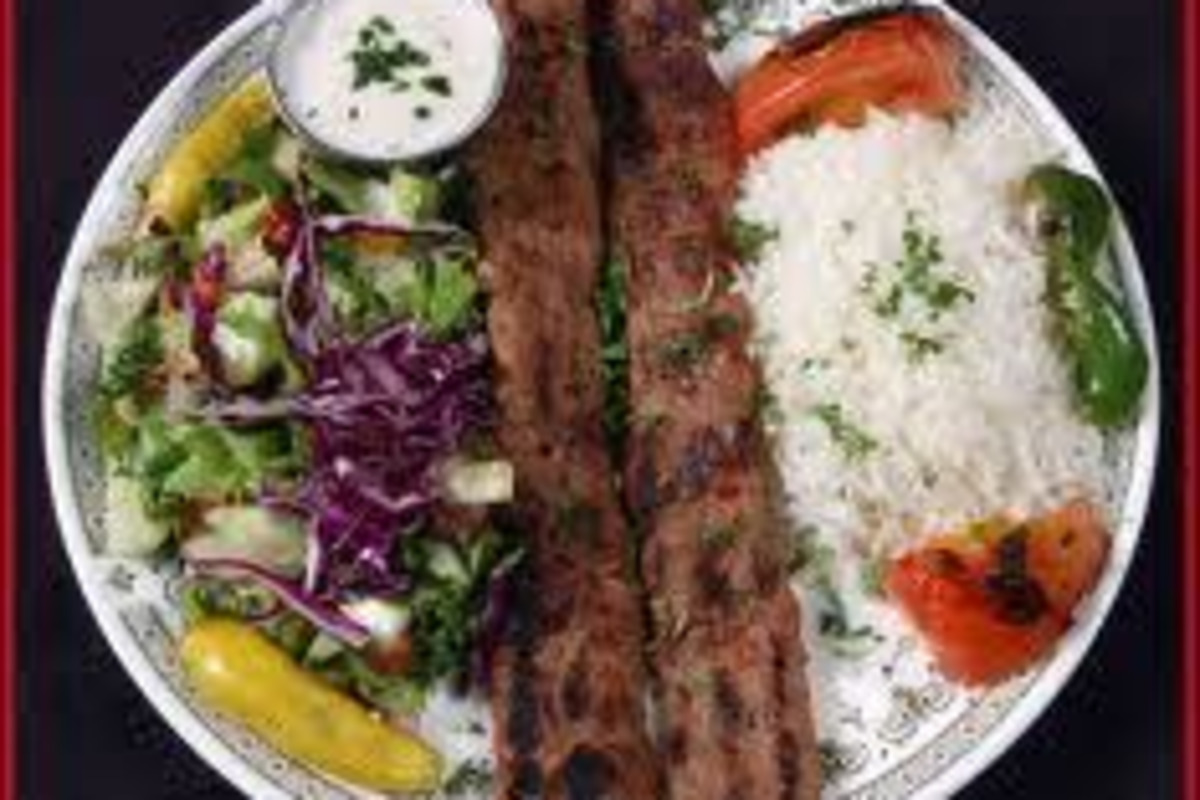
Adana kebab is the benchmark. Our Spicy Adana Kebab with Sumac runs 20 minutes prep and 10 minutes cook for four servings at 450 calories and 30g protein — the fastest full-flavor entry point in this guide. The critical variable is fat: use 80/20 lamb or lamb shoulder ground coarse. Lean lamb produces a dry, crumbly kebab no amount of sauce fixes.
Urfa is adana's non-spicy sibling — same construction, black pepper instead of pul biber. Turkish Lamb Köfte with Sumac Yogurt Drizzle is the closest recipe here at 20 minutes prep, 12 minutes cook, 420 calories and 35g protein per serving. Grilled Lamb Koftas with Sumac Yogurt and Pickled Red Onions pushes the same idea to 480 calories and 35g protein with a sharper pickle counterpoint, and Phoenician Lamb Kofta with Tahini Yogurt Sauce swaps in tahini for a nuttier, 370-calorie version.
İskender kebap is an assembly, not a cooking method: sliced döner over cubed pide bread, tomato sauce, melted butter, and a spoon of yogurt. The home shortcut is to cook any lamb kebab, slice it, and build the plate. Berlin-Style Turkish Lamb Kebabs with Hand-Cut Fries is the closest analogue at 680 calories and 42g protein for two — the four-serving variant, Berlin-Style Turkish Kebabs with Hand-Cut Fries and Cucumber-Yogurt Sauce, lands at 600 calories and 30g protein.
For cubed kebabs, Grilled Lamb Shish Kebabs with Smoky Spice Rub is the leanest option at 320 calories and 30g protein with only 15 minutes of prep. On the poultry side, Grilled Chicken Kebabs with Lemon and Oregano gives you 36g protein for 300 calories, and Authentic Lebanese Shish Tawook is the yogurt-marinated Levantine cousin at 320 calories and 30g protein.
| Kebab | Cut | Prep | Cook | Cal/srv | Protein |
|---|---|---|---|---|---|
| Spicy Adana Kebab with Sumac | Ground lamb 80/20 | 20 min | 10 min | 450 | 30 g |
| Turkish Lamb Köfte | Ground lamb | 20 min | 12 min | 420 | 35 g |
| Grilled Lamb Koftas, pickled onion | Ground lamb | 20 min | 10 min | 480 | 35 g |
| Grilled Lamb Shish Kebabs | Cubed leg/shoulder | 15 min | 12 min | 320 | 30 g |
| Grilled Chicken Kebabs | Cubed thigh | 25 min | 12 min | 300 | 36 g |
| Lebanese Shish Tawook | Cubed breast | 15 min | 20 min | 320 | 30 g |
A ridged cast iron grill pan is the single best indoor substitute for a mangal. Preheat it for a full five minutes over medium-high before the meat touches it; a cold-start grill pan steams ground-meat kebabs instead of searing them. Cook ground lamb and chicken through — 160°F for ground meat, 165°F for poultry — and rest cubed lamb three minutes off the heat.
Pilaf & Grain Sides: bulgur, rice, orzo
Pilaf is where a Turkish dinner is won or lost. It is also the cheapest part of the plate — a bulgur pilaf feeds four for under $2 as of 2026.
The house version is Turkish Bulgur Pilaf with Tomato and Toasted Pine Nuts: 10 minutes prep, 20 minutes cook, 320 calories and 7g protein per serving. Its lighter sibling, Turkish Tomato and Red Pepper Pilaf with Bulgur, lands at 220 calories with a 25-minute cook. If you want more texture, Spiced Bulgur Wheat Pilaf with Pine Nuts and Toasted Almonds doubles the nut content at 320 calories and 8g protein.
Rice pilaf is the celebration version. Saffron-Infused Basmati Rice Pilaf with Toasted Pine Nuts and Raisins serves six at 320 calories and 6g protein, with 40 minutes of prep that is mostly the rice soaking unattended — the closest thing here to a Turkish-Persian crossover, and the pilaf to make when there is a guest at the table.
Bulgur also works cold. Bulgur Wheat Tabbouleh with Mint and Parsley is 150 calories per serving with zero cook time, and Roasted Eggplant and Bulgur Salad with Pomegranate Molasses turns it into a 320-calorie main-adjacent salad. Both are better on day two, which makes them the highest-leverage thing to prep on Sunday.
Three rules that fix most bad pilaf. Toast the dry grain in fat for two minutes before liquid goes in — it is the difference between distinct grains and mush. Use a 1:1.5 bulgur-to-liquid ratio for coarse grade, not the 1:2 you would use for rice. And rest the covered pot off heat for 10 minutes before fluffing; skipping the rest is why the bottom is wet and the top is dry.
Wash and dry parsley in a salad spinner before chopping. Wet parsley bruises under the knife and bleeds green into a tabbouleh instead of staying distinct.
Mezze & Small Plates: cacik, muhammara, ezme, hummus
Meze is a category and a pace — small cold plates that come out together and stay on the table. Four dips plus warm bread is a legitimate dinner for two and a proper opener for six.
Muhammara is the one to make first, because nothing else on a standard American table tastes like it: roasted red pepper, walnut, pomegranate molasses, and Aleppo pepper. Our Roasted Eggplant Muhammara with Pomegranate Molasses adds eggplant for body — 15 minutes prep, 45 minutes roast, 180 calories per serving across six. To turn it into a main, Pan-Seared Lamb Kibbeh with Spiced Walnut Muhammara pairs it with kibbeh at 420 calories and 28g protein.
For the cooling plate, cacık is yogurt, cucumber, garlic, dried mint, and olive oil, thinner than Greek tzatziki. Turkish Grilled Eggplant with Garlic Yogurt applies the same garlic-yogurt base to charred eggplant at 180 calories and 8g protein — the best low-effort vegetable on this list.
Hummus is not originally Turkish but it is on every modern Turkish mezze table. Turkish Hummus and Vegetable Platter serves six at 200 calories with 25 minutes of prep and no cooking at all. The grilled version, Hummus and Grilled Veggie Platter, runs 320 calories and 10g protein.
Ezme — the chopped raw tomato, pepper, and onion salad — is the one dip that rewards knife work over a food processor. Pulse it and you get salsa; hand-dice it and the pieces stay distinct in the pomegranate-molasses dressing. A sharp chef's knife does more for ezme than any appliance, and the knives category has the rest of the options.
Zeytinyağlılar: the olive-oil vegetable canon
The biggest gap between how Turkish food is eaten in Turkey and how it is ordered in the United States is this category. Zeytinyağlılar — literally "the ones with olive oil" — are vegetables braised in olive oil and served at room temperature, and they make up an entire course in a Turkish home. They are also, almost without exception, vegan. If you have only eaten Turkish food from a kebab counter, you have missed half the cuisine.
Three rules separate a real zeytinyağlı from a generic braised vegetable. Use more olive oil than feels reasonable — a quarter cup for four servings is the floor, because the oil is the sauce, not a cooking medium. Cook the vegetable well past the point of crunch; these dishes are meant to be soft. And serve them cool, never hot: the flavors round out as they drop to room temperature, which is why every one of these is better made the day before.
Turkish Spiced Chickpea and Eggplant Stew is the entry point at 15 minutes prep, 40 minutes cook, 280 calories and 10g protein for four. The eggplant collapses into the tomato and the chickpeas carry the protein — this is a complete dinner with bread and nothing else. Spiced Turkish Chickpea Stew with Roasted Eggplant roasts the eggplant separately first, which costs five more minutes and buys noticeably more concentration, at 320 calories and 12g protein.
For stuffed vegetables — the dolma family — Roasted Eggplant Chickpea Stuffed Peppers is the closest thing here to biber dolması at 25 minutes prep, 35 minutes bake, 320 calories and 14g protein. Low-Fat Spinach and Feta Stuffed Peppers is the lighter, faster version at 180 calories and 12g protein.
Two more belong on a Turkish vegetable table: Sumac-Roasted Cauliflower with Tahini Drizzle at 10 minutes prep and 180 calories, and Zucchini and Summer Squash Fritters with Dill Yogurt Sauce — the nearest catalog match to mücver, the Turkish courgette fritter — at 280 calories and 10g protein.
| Zeytinyağlı dish | Prep | Cook | Cal/srv | Protein | Vegan as written |
|---|---|---|---|---|---|
| Turkish Spiced Chickpea and Eggplant Stew | 15 min | 40 min | 280 | 10 g | Yes |
| Spiced Turkish Chickpea Stew, roasted eggplant | 15 min | 45 min | 320 | 12 g | Yes |
| Roasted Eggplant Chickpea Stuffed Peppers | 25 min | 35 min | 320 | 14 g | Yes |
| Spinach and Feta Stuffed Peppers | 20 min | 30 min | 180 | 12 g | No — feta |
| Sumac-Roasted Cauliflower, tahini | 10 min | 20 min | 180 | 4 g | Yes |
| Zucchini Fritters, dill yogurt | 20 min | 15 min | 280 | 10 g | No — egg, yogurt |
Make two of these on a Sunday and you have the cold half of a mezze board for the week. They keep four to five days covered in the fridge and improve for the first two. If you are cooking Turkish vegetarian as a rule rather than an exception, mercimek köftesi — red lentil and bulgur patties, no cooking beyond softening the lentils — is the dish to learn next; it is the one Turkish households make when there is nothing in the house.
Soups & Börek: what a Turkish kitchen makes when it is cold
Soup in Turkey is not a starter course. It is breakfast, hangover food, and the default cheap dinner. Mercimek çorbası — red lentil soup — is the one every household makes, and our Spiced Turkish Lentil Soup with Toasted Paprika and Lemon is a faithful version at 10 minutes prep, 30 minutes cook, 190 calories and 12g protein for four. The finishing step is not optional: bloom paprika or pul biber in butter and pour it over the bowl at the table. Skip it and the soup tastes like plain lentils.
When you want the same format with more protein, Turkish-Style Turkey and Vegetable Soup delivers 28g protein for 220 calories in 25 minutes of cooking — the best protein-per-calorie ratio anywhere in this guide.
Börek is the other cold-weather pillar: layered thin pastry with a savory filling, baked in a tray and cut into squares. Hand-rolled yufka is hard to source in most US cities, and store-bought phyllo is the accepted substitute — it bakes drier, so brush every layer with butter or olive oil rather than every third. Crisp Phyllo Triangles with Spinach and Dill Filling is the ıspanaklı börek shape at 20 minutes prep, 25 minutes bake, 220 calories and 8g protein across six servings. Phyllo-Wrapped Cheese Triangles with Honey and Sesame is the peynirli version at the same 220 calories and 7g protein.
For the leavened side of Turkish baking, Wood-Fired Pide with Spiced Turkish Sausage and Roasted Peppers is the boat-shaped pide with sucuk at 410 calories and 22g protein for four.
And because Turkish breakfast is a real meal rather than a rushed one, Turkish-Style Fried Eggs with Herbed Yogurt — the çılbır template of eggs over garlicky yogurt finished with chili butter — takes 10 minutes prep and 10 minutes cook for two, at 290 calories and 15g protein. It is the highest-return 20 minutes in this entire guide.
| Cold-weather dish | Prep | Cook | Servings | Cal/srv | Protein |
|---|---|---|---|---|---|
| Spiced Turkish Lentil Soup | 10 min | 30 min | 4 | 190 | 12 g |
| Turkish-Style Turkey and Vegetable Soup | 15 min | 25 min | 4 | 220 | 28 g |
| Crisp Phyllo Triangles, spinach and dill | 20 min | 25 min | 6 | 220 | 8 g |
| Phyllo-Wrapped Cheese Triangles | 15 min | 20 min | 6 | 220 | 7 g |
| Wood-Fired Pide with sucuk | 20 min | 20 min | 4 | 410 | 22 g |
| Turkish-Style Fried Eggs, herbed yogurt | 10 min | 10 min | 2 | 290 | 15 g |
A wide, low enameled saucepan suits both the lentil soup and the butter-bloom step better than a tall stockpot, because you want evaporation rather than depth. For börek, a rimmed half sheet pan is the right vessel — phyllo needs a flat floor and air on top, and a deep casserole dish steams the bottom layers into paste.
Weeknight Turkish Dinners (10 recipes with links)
Every recipe here is on the table in 60 minutes or less of combined prep and cook time. Ordered fastest first.
| # | Recipe | Total time | Cal/srv | Protein | Serves |
|---|---|---|---|---|---|
| 1 | Turkish Grilled Eggplant with Garlic Yogurt | 25 min | 180 | 8 g | 4 |
| 2 | Grilled Lamb Shish Kebabs | 27 min | 320 | 30 g | 4 |
| 3 | Grilled Lamb Koftas with Sumac Yogurt | 30 min | 480 | 35 g | 4 |
| 4 | Spicy Adana Kebab with Sumac | 30 min | 450 | 30 g | 4 |
| 5 | Phoenician Lamb Kofta with Tahini Yogurt | 30 min | 370 | 28 g | 4 |
| 6 | Turkish Bulgur Pilaf with Tomato and Pine Nuts | 30 min | 320 | 7 g | 4 |
| 7 | Saffron-Infused Chicken Shawarma | 30 min | 360 | 42 g | 4 |
| 8 | Turkish Lamb Köfte with Sumac Yogurt Drizzle | 32 min | 420 | 35 g | 4 |
| 9 | Grilled Chicken Kebabs with Lemon and Oregano | 37 min | 300 | 36 g | 4 |
| 10 | Spiced Turkish Lentil Soup with Toasted Paprika | 40 min | 190 | 12 g | 4 |
Two more worth keeping in rotation when you have 50 minutes: Lebanese-Inspired Chicken Shawarma Bowl with Garlic Sauce at 520 calories and a standout 45g protein, and Vegan Pide-Inspired Flatbread with Smoky Eggplant and Bell Peppers at 480 calories for a meatless night.
The highest-leverage weeknight move is decoupling. Mix kebab meat and make one dip on Sunday; both hold four days covered in the fridge. Then a Tuesday dinner is 12 minutes of grill-pan time plus a 20-minute pilaf that cooks unattended.
A 4-Day Turkish Home-Cooking Meal Plan
This is the plan for a normal week, not a feast. It assumes one 90-minute Sunday session and 10–40 minutes of cooking on each weeknight, and it deliberately reuses three components: one double batch of bulgur pilaf, one bowl of garlic yogurt, and one jar of pickles carry across all four days.
Sunday prep, about 90 minutes. Make a double batch of Turkish Bulgur Pilaf with Tomato and Toasted Pine Nuts. Make Roasted Eggplant Muhammara with Pomegranate Molasses and one zeytinyağlı — Turkish Spiced Chickpea and Eggplant Stew is the most useful because it doubles as a full dinner. Whisk a pint of full-fat yogurt with grated garlic and salt; that is your sauce for the week.
| Day | Main | From the Sunday batch | Active time | Cal/srv |
|---|---|---|---|---|
| Monday | Turkish-Spiced Lamb Meatballs with Yogurt Sauce | Bulgur pilaf, garlic yogurt | 35 min | 350 |
| Tuesday | Turkish Spiced Chickpea and Eggplant Stew, reheated | Warm pita, muhammara | 10 min | 280 |
| Wednesday | Pan-Seared Chicken with Spiced Turkish Tomato Sauce | Bulgur pilaf, shepherd's salad | 35 min | 350 |
| Thursday | Spiced Turkish Lentil Soup with Toasted Paprika and Lemon | Crisp Phyllo Triangles with Spinach and Dill | 40 min | 190 |
Two notes on sequencing. Put the meatballs on Monday, because ground lamb is the item you least want sitting in the fridge until Wednesday. And put the soup last, because by Thursday the pilaf is gone and you want a night that needs nothing from the prep batch.
Total grocery cost for four dinners for four people runs roughly $55–70 as of 2026, with the lamb accounting for about half of it. Swapping Monday's lamb for 80/20 ground beef drops that by $8–12 and costs you a little of the gaminess that makes köfte taste Turkish rather than generic.
If you want a fifth night or a Sunday roast, Turkish-Style Slow Braised Lamb with Tomato and Eggplant runs 20 minutes of prep and two hours unattended for four servings at 450 calories and 38g protein. Build the whole week and its consolidated shopping list in the meal planner — it merges the bulgur, yogurt, and eggplant across all four days into one trip.
Weekend Feast Menu (5 dishes for entertaining)
This menu serves six with roughly 2.5 hours of active work, most of which can be done the day before.
Course 1 — the mezze board. Turkish Hummus and Vegetable Platter (serves 6, 200 cal) and Roasted Eggplant Muhammara with Pomegranate Molasses (serves 6, 180 cal). Both are better made a day ahead. Add warm pita and a bowl of olives.
Course 2 — the flatbread. Charred Pepper and Spiced Lamb Flatbread at 450 calories and 28g protein for four, or the six-serving Baked Lahmacun with Ground Lamb and Sumac-Spiced Tomato Sauce at 280 calories. Note the 80-minute prep on the lahmacun — that is dough rest, not hands-on time, so start it before the mezze.
Course 3 — the grill. Spicy Adana Kebab with Sumac, doubled. Ten minutes of cook time means it goes on last, while guests are eating lahmacun.
Course 4 — the vegetable and the grain. Herbed Eggplant Moussaka (serves 6, 420 cal, 25g protein) or Braised Lamb and Rice Dolma with Warm Allspice (serves 6, 280 cal), with Spiced Bulgur Wheat Pilaf with Pine Nuts and Toasted Almonds alongside.
Course 5 — dessert. Honey-Rose Pistachio Baklava Rolls, 8 servings at 290 calories, 20 minutes prep and 30 minutes bake. Make them the morning of; the syrup needs hours to soak in.
Run order: mezze and moussaka the day before. Day of, start lahmacun dough at T-2:00, bake baklava at T-1:30, cook pilaf at T-0:40, grill kebabs at T-0:15.
Sweets Beyond Baklava
Turkish dessert splits into three families, and home cooks outside Turkey almost always stop at the first one. Syrup-soaked pastry (baklava, kadayıf) is the famous branch. Semolina and milk puddings (revani, sütlaç, muhallebi) are the branch actually eaten on a weeknight. And coffee is its own course, not an afterthought.
For the pastry branch, Honey-Rose Pistachio Baklava Rolls is the fastest route at 20 minutes prep and 30 minutes bake for eight servings at 290 calories. Walnut and Cinnamon Phyllo Pastry with Honey Syrup is the walnut version Turkish households actually make more often than the pistachio one — walnuts run about a third the price — at 280 calories across eight servings. Baklava-Inspired Phyllo Tart with Honey and Pistachios collapses the same flavors into a single tart at 320 calories, which is a far easier build than rolling two dozen individual pieces.
One rule governs all three: syrup and pastry must be at opposite temperatures. Pour cool syrup over hot pastry, or hot syrup over fully cooled pastry. Match the temperatures and the phyllo goes soggy instead of drinking the syrup up.
Revani — semolina cake drenched in syrup — is the everyday Turkish dessert, and Turkish Coffee-Spiced Semolina Cake with Honey Syrup is the closest version here at 15 minutes prep, 35 minutes bake, 360 calories across eight. Turkish Coffee-Spiced Date and Walnut Bars are the make-ahead option at 220 calories for twelve, and Turkish Coffee Panna Cotta with Cardamom Honey Drizzle is the dinner-party version at 250 calories for four.
Finish with the coffee itself. Cardamom-Spiced Turkish Coffee with Rose and Orange Blossom takes 5 minutes prep and 8 minutes on the stove for two cups at 30 calories. Turkish coffee is brewed unfiltered in a long-handled cezve — bring it up to the foam line three times without ever letting it reach a rolling boil, and spoon the foam into the cups before you pour.
| Dessert | Prep | Cook | Servings | Cal/srv |
|---|---|---|---|---|
| Honey-Rose Pistachio Baklava Rolls | 20 min | 30 min | 8 | 290 |
| Walnut and Cinnamon Phyllo Pastry | 40 min | 25 min | 8 | 280 |
| Baklava-Inspired Phyllo Tart | 20 min | 30 min | 8 | 320 |
| Turkish Coffee-Spiced Semolina Cake | 15 min | 35 min | 8 | 360 |
| Turkish Coffee-Spiced Date and Walnut Bars | 15 min | 35 min | 12 | 220 |
| Turkish Coffee Panna Cotta | 10 min | 10 min | 4 | 250 |
A sharp chef's knife matters more here than anywhere else in the guide: baklava is scored into diamonds before it bakes, and a dull blade drags the phyllo layers instead of cutting them, which is why home baklava so often comes out with ragged edges.
What to Serve & Drink With Turkish Food
Bread. Pide (the pillowy leavened flatbread) or lavash. Warm it — 90 seconds in a dry skillet per side beats an oven for two or three pieces. Bread is a utensil here, not a side dish.
Salad. A shepherd's salad (çoban salatası) of diced tomato, cucumber, onion, and parsley with lemon and olive oil. It exists to cut fat, so dress it sharply. Bulgur Wheat Tabbouleh with Mint and Parsley is a heartier stand-in at 150 calories.
Pickles. Turşu — pickled peppers, cabbage, carrot — from any Middle Eastern grocer. A $6 jar lasts a month and does more for a rich kebab plate than another dip.
Drinks. Ayran (salted yogurt drink, 1:1 yogurt to cold water plus a pinch of salt) is the traditional pairing and genuinely works against chili heat. For alcohol, rakı is the canonical match for a mezze board; a dry rosé or a light Turkish Öküzgözü red works with grilled lamb. Finish with Turkish coffee, whose brewing tradition is on the UNESCO Intangible Cultural Heritage list — serve it unfiltered in small cups and let the grounds settle for a minute before drinking.
Wine and heat. Skip big tannic reds with pul-biber-heavy dishes. Tannin plus capsaicin reads as bitter. Rosé, a chilled light red, or beer all handle adana better than a Cabernet does.
Common Pitfalls
Five failure modes account for most disappointing home Turkish food.
Lean meat in ground-meat kebabs. 90/10 beef or lean ground lamb produces a dry, crumbly result. You want 80/20 minimum, and lamb shoulder ground coarse is better than anything pre-packaged. This is the single most common mistake.
Under-preheating the pan. A grill pan needs five full minutes over medium-high. Meat that hits a warm-but-not-hot surface releases water and steams — you get grey kebabs with no crust and a wet pan.
Fine bulgur in a pilaf. Grade #1 fine bulgur is for kısır and tabbouleh. In a hot pilaf it collapses into porridge in under 10 minutes. Buy coarse #3 and check the bag; the grade number is usually small print on the back.
Over-processing ezme and muhammara. Both should have texture. A food processor run past 10 pulses turns muhammara into a smooth paste that tastes flat, because the walnut pieces are what carry the fat and the chew.
Skipping the acid. Turkish plates are rich — lamb fat, olive oil, yogurt. Sumac, lemon, pickles, and pomegranate molasses are not garnishes; they are structural. A kebab plate with no sour element tastes heavy after four bites and readers routinely diagnose this as "too much spice" when it is actually too little acid.
More regional roundups
22 Middle Eastern Dinners: Shawarma, Kebabs & Hummus Bowls, 22 Greek Weeknight Dinners, and 22 Moroccan & North African Dinners.
Frequently asked questions
What makes Turkish kebabs different from other Middle Eastern kebabs?
Can I cook these Turkish recipes without special equipment?
Where do I buy pomegranate molasses and Aleppo pepper?
Are Turkish recipes family-friendly enough for picky eaters?
What's a good Turkish menu for a dinner party of six?
How is Turkish cuisine different from Greek cuisine?
Can I cook Turkish food vegetarian or vegan?
How long should Turkish kebabs marinate?
Sources
- en.wikipedia.org
- en.wikipedia.org
- en.wikipedia.org
- en.wikipedia.org
- en.wikipedia.org
- en.wikipedia.org
- en.wikipedia.org
- en.wikipedia.org
- ich.unesco.org
- fdc.nal.usda.gov
- en.wikipedia.org
- en.wikipedia.org
- en.wikipedia.org
- en.wikipedia.org
- en.wikipedia.org
- en.wikipedia.org
Plan a week of meals in two minutes.
Tell our AI what you have and what you like — it builds your plan, shopping list, and Instacart cart. No account needed.
Try free →